Sunday, September 16, 2012

Civil war battle in waynesville

The "Battle" of Waynesville

Waynesville was the scene of the last and perhaps most unusual skirmish in the eastern theater of the American Civil War. On May 6, 1865, Union Colonel William C. Bartlett's 2nd North Carolina (Federal) Mounted Infantry were raiding, pillaging, burning homes and engaging in other activities to undermine the economic base of the area and were attacked at White Sulphur Springs (east of Waynesville) by a detachment of rebels from the Thomas Legion of Highlanders, who had been summoned for help by locals. East of the Mississippi, Thomas' Legion fired "The Last Shot" of the Civil War in White Sulphur Springs, North Carolina. The Legion consisted of soldiers who had served under Jubal A. Early during the Shenandoah Valley Campaigns of 1864, but had been sent back to their native North Carolina mountains to engage in guerrilla warfare against the remaining Union forces. The disoriented Union soldiers retreated into Waynesville, and on the evening of May 6 remaining elements of the Thomas Legion surrounded the town. The soldiers lit numerous bonfires on the ridges above the town and engaged in war chants in an effort to intimidate the Federals. The following day the Confederate commanders Gen. James Green Martin and Col. William Holland Thomas (for whom the Legion was named) negotiated a surrender. These commanders had been made aware that Generals Robert E. Lee and Joseph E. Johnston had already capitulated and that continued hostilities would prove pointless.

Waynesboro. Nc. Stayed sep 15

The Town of Waynesville was founded in 1810 by Colonel Robert Love, an American Revolutionary War soldier. He donated land for the courthouse, jail, and public square, and named the town after his former commander in the war, General "Mad" Anthony Wayne.
Waynesville also has a connection to another war. With news of General Robert E. Lee's surrender traveling slowly, the American Civil War continued in Western North Carolina. The final shots of that war, east of the Mississippi River, were fired near Sulphur Springs and General James Martin surrendered honorably on May 9, 1865 (See The "Battle" of Waynesville below.)
The Town of Waynesville was incorporated in 1871. In July 1995, the towns of Hazelwood and Waynesville merged into one community and continued to grow with a population today of almost 10,000.

[edit]Frog Level

Frog Level Historic District
Waynesville, North Carolina is located in North Carolina
Location:Roughly bounded by Commerce and Boundary Sts., Water St. and Richland Creek, Depot St., and 80 Commerce St.,Waynesville, North Carolina
Coordinates:35°29′40″N82°59′26″W
Area:4.9 acres (2.0 ha)
Architectural style:Early Commercial, Romanesque
Governing body:Local
NRHP Reference#:03000854[5]
Added to NRHP:August 28, 2003
Waynesville Train Depot in Frog Level, c. 1890s
Waynesville began to see development after arrival of the railroad in 1884. The agricultural, lumber and tourism industries in Waynesville and Haywood County began to thrive as access to the west was opened up.
The area of Waynesville located along Richland Creek, northwest and down hill from Main Street, was where the railroad tracks were laid. Until this time the area had been essentially a swampland, with a few scattered buildings but no major development. Once the depot was built and the train arrived this section was developed. It was given the name of Frog Level. Frog Level was so named by the local community because of its low-lying location along Richland Creek, the "frog level" when the area flooded.
Downtown and the nearby Frog Level commercial centers of Waynesville continued to be the central focus for social life, transportation, and wholesale and retail businesses through the 1940s. Businesses in the Frog Level area in the 1930s and 1940s included hardware stores, farm supplies, coal sales, auto dealers and garages, furniture stores, wholesale groceries, warehouses and lumber companies, all businesses dependent on the railroad. However, as the automobile became the primary mode of transportation for most residents, the railroad declined in importance. This in turn lead to a shift of business away from Frog Level. The last passenger train arrived in Waynesville in 1949, and freight trains pass through Frog Level twice daily, with most trains continuing on to Sylva.
By the 1980s the railroad in Waynesville had been integrated into the Southern Railway Company system. The first depot burned in 1900, but it was soon replaced with another depot that remained standing until 1987.

[edit]Neighborhoods


Where we ate

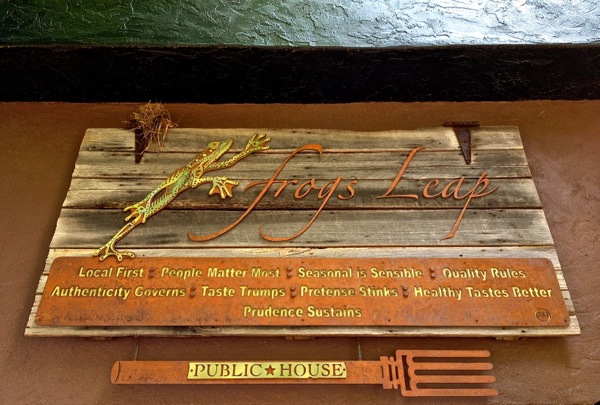
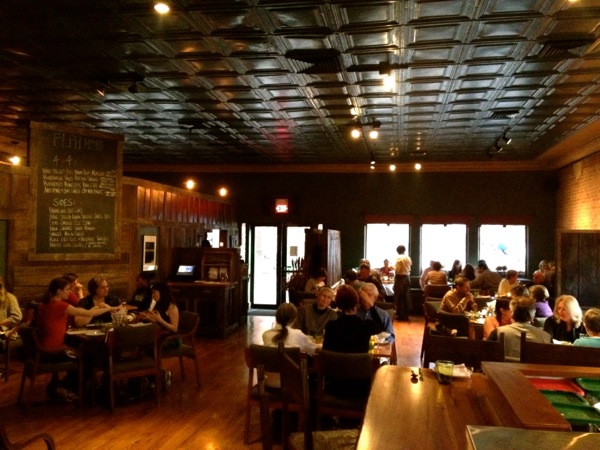
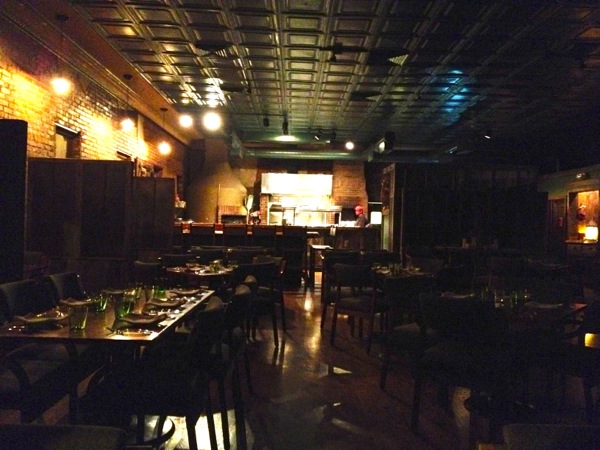
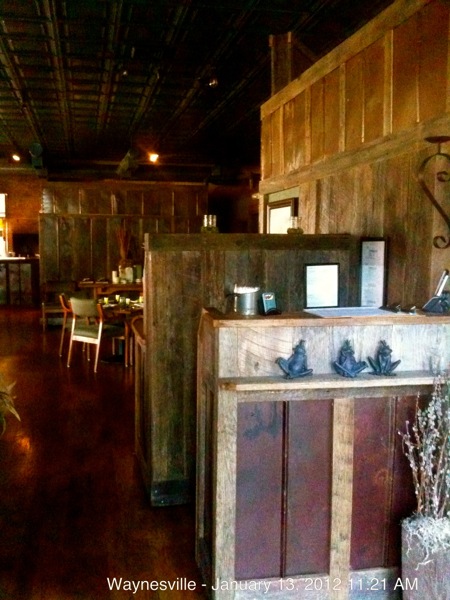
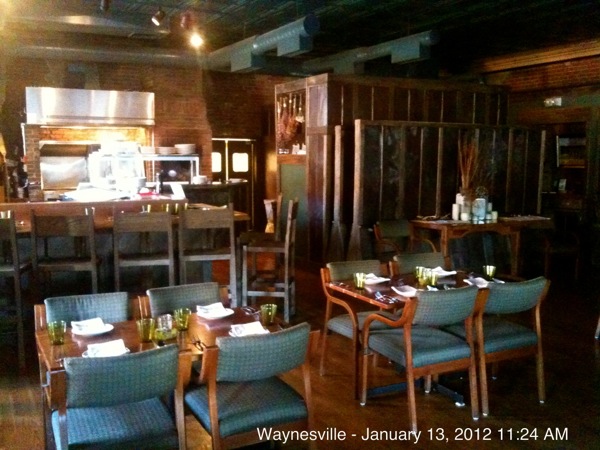
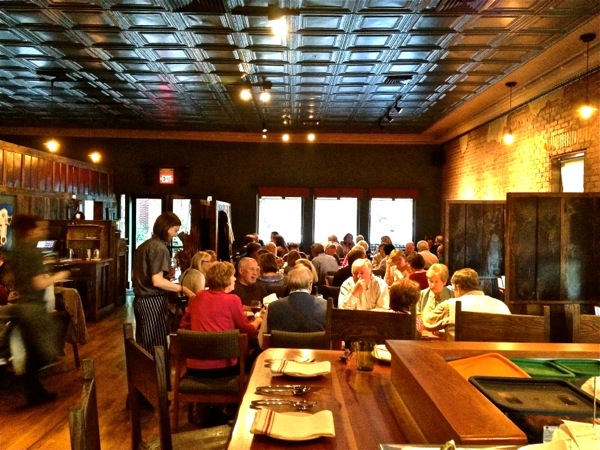
Frogs Leap Public House
_______________________
A Unique Farm to Fork Experience: Innovative Southern Food with a Local Backbone
& Home Grown Libations
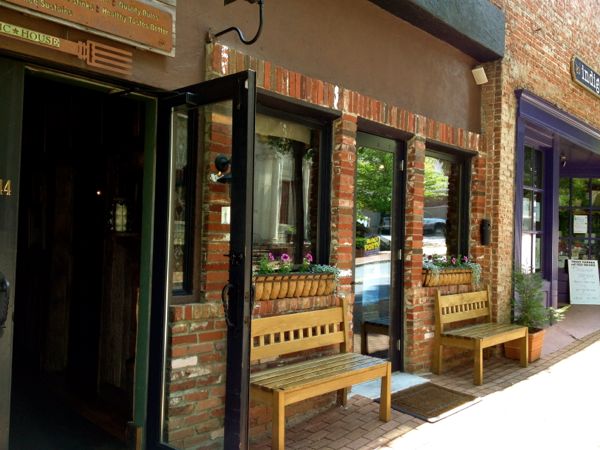
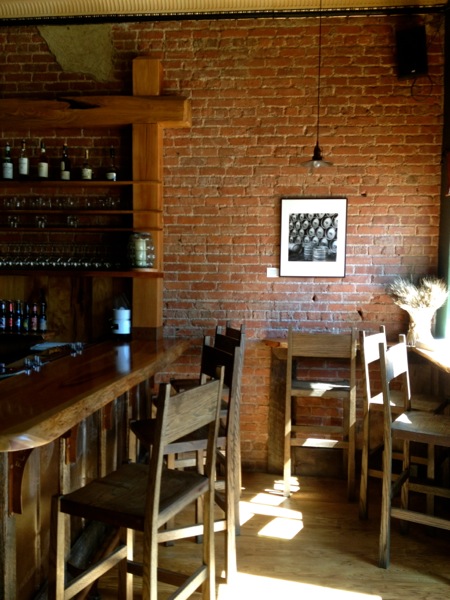
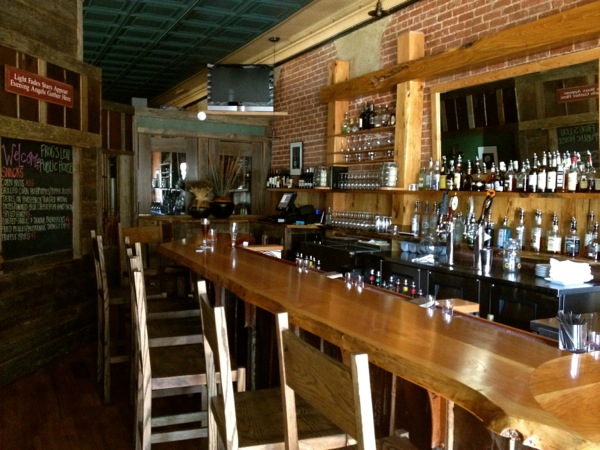
Frogs Leap Public House is a farm to table country pub at the corner of Church and Montgomery Streets, built in 1918 as the southeast’s first Buick dealer just one block south of Main in the heart of historic downtown Waynesville. FLPH is focused on the culture, art, music, wine, beer and especially the food of Western North Carolina. Owners Toni & Kaighn B. Raymond have come to Waynesville to open Frogs Leap Public House, their debut restaurant, after spending the past 20 years fine-tuning their concept while running fine dining restaurants in Georgia, Tennessee and beyond.
Like the City of Waynesville itself, FLPH is Southern down to its roots, but draws influences from around the world.  The food is fresh and local, the libations are home grown, the music is American and has a beat. FLPH is home to a family with a passion for serving world class food, wine, and spirits in a soulful, comforting atmosphere. This is a place where business diners eat alongside families and foodies on any given day. The menu may feature duck confit and black truffles along with BBQ and pimento cheese. It’s a place to go for a local craft beer after work or to celebrate a special occasion. FLPH offers a carefully selected list of fine wines by the bottle and glass, award winning craft brews both on draft and in bottle. A sipping list including single malt scotches, bourbons, rye, brandy, port and a seasonal list of home grown cocktails created with house-made syrups, infusions and garnishes.
FLPH always uses the highest quality local ingredients to create ever changing menus that represent a fresh take on Southern Food. We source our meats, cheese, poultry, seafood, produce, and specialty products from a bounty of North Carolina farmers, ranchers, and artisans whenever possible. At FLPH, seasonality, sustainability, and buying local are our core culinary and business philosophies, and are achieved through preparing the best food, using the best ingredients, supporting our local economy, and conserving our natural resources. Frogs Leap’s great locally sourced ingredients are further enhanced through natural cooking techniques, an authentic wood-burning pizza oven, a slow smoker and an Argentine wood grill impart the warm glow of the North Carolina woods to our dishes.
Frogs Leap is an environmentally responsible business. We print menus in-house on recycled paper to allow creative use of seasonal, local ingredients while maintaining a consistent menu that you will recognize through the seasons and return for. We recycle, reduce energy consumption and convert our used cooking oil into bio fuel. We are proud of the fact that we are recycling and composting nearly every ounce of product that comes through our doors.  We have no dumpster as we recycle or compost everything and hope to one day return our compost to a garden where we will grow delicious, homegrown vegetables and herbs that will complete the cycle as they make it directly to our guests through the Frogs Leap Public House menu.
Local First:People Matter Most:Seasonal is Sensible:Quality Rules:Authenticity Governs:Taste Trumps:Pretense Stinks:Healthy Tastes Better:Prudence Sustains