From the first page this book had me so much information. Things I want to look up and under stand.
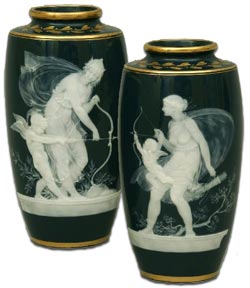
1st what is minton porcelain specifically in the sevres style
then what is a iznik jar

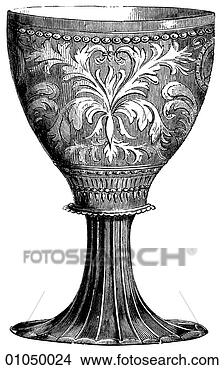
Then what is a venetian goblet

and a Lustre bowl by Mr de morgan

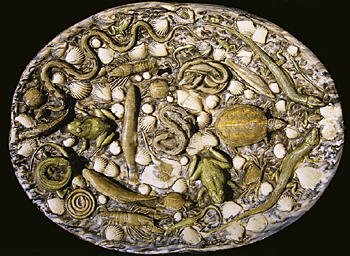
Bernard palissy

The name Stoke Prior comes from a cell or monastery belonging to the Prior of Leominster. It is situated three miles south of Leominster and eleven miles north of Hereford. In the 15th century, after the Welsh war of independence, Owen Glendower gave Stoke Prior to one of his faithful followers, Rhys ap Griffith.
The church is dedicated to St Luke. It was entirely rebuilt in 1863 in the Decorated style, on the site of a Norman edifice. The embattled west tower contains five bells, the oldest of which is pre-Reformation and was made at the Worcester foundry in 1460. The huge stained glass east window is a memorial to Thomas Bryan in 1864, the MP for Leominster. A tombstone of the first burial in the churchyard is to Elizabeth Howl in 1331.
There are three historic houses in the village. The Priory is thought to be of medieval origin, and to have been used as a monk's cell. Paradise Walk, to the north of the building, still exists. The Great House has a cross wing at the west end and the south gable has the original dentilled barge boards. The dovecote, south-east of the house, is reputed to be 17th century, with 470 nest holes in 13 tiers, and the strap-hinges on the doorway are of the same date.
The third is the Bury Farm. In 1841, a Mr Waland, the owner, offered the farm of 223 acres, exclusive of timber, to John Arkwright of Hampton Court for 12,000 guineas! At one time this farm was charged with payment of trug wheat (a twelfth part of a horse wagon of corn) to the vicar of Leominster for officiating at the chapels of ease at Stoke Prior and Docklow. This claim, unknown elsewhere in England, was passed to the incumbent when separate parishes were formed in the 17th century.
The population in 1861 was 348, but it had declined to 230 in 1988. The occupations, 100 years ago, suggest that the village was self supporting. There were farmers, hop-growers, gardeners, wheelwrights, blacksmiths, millers, tailors, plumbers, glaziers, grocer, butcher, postmistress and shoemaker. Today, the inhabitants are farmers, builders, bank employees, people working in surrounding towns and senior citizens.
At the eastern end of the village, a Roman settlement was found at Blackwardine. Here, coins, shards, skeletons and a kiln were uncovered during the construction of the railway in 1881.
Headlines in 1891 reported a hoard of seven silver vessels discovered in a rabbit hole behind the Slough Farm. It was declared Treasure Trove and obtained by the Victoria & Albert Museum in 1893. The Crown awarded £25 to each of the discoverers. These vessels were thought to have been hidden during the Civil War, when Sir William Waller took Leominster in 1643 and left it in the command of the famous Col John Birch, but the true facts have never been known.
and Eltenberg Reliquary