i LOVE THESE BOOKS STARTED WITH THE HOUSE ON THE STRAND THEN LISTENED TO REBECCA AND THEN BOUGHT JAMAICAN INN AND LISTENING TOO ALSO FOUND AT ST VINCENT DE PAUL CASTLE MUIR
 The House on the Strand
 is a novel by
Daphne du Maurier. First published in 1969 by
Victor Gollancz, it is one of her later works. The US edition was published by
Doubleday.
Like many of du Maurier's novels,
The House on the Strand has a supernatural element (though in this case, it can also be accounted as
science fiction). It is concerned with the ability to mentally
travel back in time and experience historical events at first hand - but not to influence them.
It is set in and around Kilmarth (where Daphne du Maurier lived from 1967) near the
Cornish village of
Tywardreath, which in fact translates from the
Cornish language as "House on the Strand".
Plot summary
The narrator, Dick Young, has been offered the use of Kilmarth, the house of his
biophysicist friend Magnus Lane, in Cornwall. He also agrees to act as a guinea-pig for a drug Magnus has developed.
On taking it for the first time, he finds that it enables him to enter into the landscape around him as it was during the early 14th century. He becomes drawn into the lives of the people he sees there, particularly Lady Isolda Carminowe, and he is soon addicted to the experience.
Within the landscape Dick is compelled to follow Roger, steward to Sir Henry Champernoune, Lord of the Manor. Roger hides his enduring love for Isolda until the day he dies, and Dick comes to share this love.
Each visit corresponds to a key moment in the story of Isolda and Roger. Each time Dick returns to real time he is more confused; throughout the experience he is unable to interact with Roger or Isolda. Any attempt to do so brings Dick crashing back to the present in a state of nauseous exhaustion. (The drug has other dangers in that following Roger means that Dick walks unaware through the modern landscape with all the danger that entails.)
His wife, Vita, and stepsons join him in Cornwall and are worried by his bizarre behaviour. It is made clear that Dick does not truly love his wife, and certainly does not want to act as father to her sons—which makes plausible his increasing desire to escape into the past.
His friend Magnus intends to join Dick but before he does so is killed in what seems like a bizarre accident or suicide—struck by a train whilst straying onto the local railway track. Dick knows the truth, that Magnus was under the influence of the drug; this makes the inquest difficult.
Dick's second to last trip ends with him attempting to attack a woman named Lady Joanna in the 14th century, but in reality attacking Vita. She and her children hide from him and he contacts a doctor who helps to wean him from his addiction to the drug. Dick explains the power of the drug and the doctor has the drug analysed and reveals its extremely dangerous nature to Dick. However his addiction is such that he takes the last remaining dose soon after.
Dick's last visit to the 14th century culminates in Roger confessing his love and the fact that he ensured that Isolda died pleasantly rather than succumb to a worse fate. Roger dies and Dick wakes. Since both Roger (his doppelganger/receptor) and Isolda are dead, Dick has little incentive to return to the other world, but in any case there is no drug left to ease his passage there. As the book closes Dick attempts to pick up the phone but suddenly finds he is unable to grip it.
The ending is ambiguous: is Dick dead, paralysed or simply collapsing? Daphne du Maurier said of it: "What about the hero of
The House on the Strand? What did it mean when he dropped the telephone at the end of the book? I don’t really know, but I rather think he was going to be paralysed for life. Don’t you?"
Early life
Daphne du Maurier was born in London, the second of three daughters of the prominent actor-manager Sir
Gerald du Maurier and actress
Muriel Beaumont (maternal niece of
William Comyns Beaumont).
[1] Her grandfather was the author and
Punch cartoonist George du Maurier, who created the character of
Svengali in the novel
Trilby.
These connections helped her in establishing her literary career, and du Maurier published some of her very early work in Beaumont's
Bystander magazine. Her first novel,
The Loving Spirit, was published in 1931.
Du Maurier was also the cousin of the
Llewelyn Davies boys, who served as
J.M. Barrie's inspiration for the characters in the play
Peter Pan, or The Boy Who Wouldn't Grow Up. As a young child, she met many of the brightest stars of the theatre, thanks to the celebrity of her father. On meeting
Tallulah Bankhead, she was quoted as saying that the actress was the most beautiful creature she had ever seen.
[citation needed]
Novels, short stories and biographies
Literary critics have sometimes berated du Maurier's works for not being "intellectually heavyweight" like those of
George Eliot or
Iris Murdoch.
[citation needed] By the 1950s, when the socially and politically critical "angry young men" were in vogue, her writing was felt by some to belong to a bygone age.
[citation needed] Today, she has been reappraised as a first-rate storyteller, a mistress of suspense. Her ability to recreate a sense of place is much admired, and her work remains popular worldwide. For several decades she was the most popular author for library book borrowings.
[citation needed]
The novel
Rebecca, which has been adapted for stage and screen on several occasions, is generally regarded as her masterpiece. One of her strongest influences here was
Jane Eyre by
Charlotte Brontë. Her fascination with the
Brontë family is also apparent in
The Infernal World of Branwell Brontë, her biography of the troubled elder brother to the Brontë girls. The fact that their mother had been Cornish no doubt added to her interest.
[citation needed]
Other notable works include
The Scapegoat,
The House on the Strand, and
The King's General. The latter is set in the middle of the
first and
second English Civil Wars. Though written from the
Royalist perspective of her native Cornwall, it gives a fairly neutral view of this period of history.
Several of her other novels have also been adapted for the screen, including
Jamaica Inn,
Frenchman's Creek,
Hungry Hill, and
My Cousin Rachel (1951). The Hitchcock film
The Birds (1963) is based on a treatment of one of her short stories, as is the film
Don't Look Now (1973). Of the films, du Maurier often complained that the only ones she liked were
Alfred Hitchcock's
Rebecca and
Nicolas Roeg's
Don't Look Now. Hitchcock's treatment of
Jamaica Inn involved a complete rewrite of the ending to accommodate the ego of its star,
Charles Laughton. Du Maurier also felt that
Olivia de Havilland was totally wrong as the (anti-)heroine in
My Cousin Rachel.
[2] Frenchman's Creek fared rather better with its lavish Technicolor sets and costumes. Du Maurier later regretted her choice of
Alec Guinness as the lead in the film of
The Scapegoat, which she partly financed.
[3]
Du Maurier was often categorised as a "romantic novelist" (a term she deplored),
[4] though most of her novels, with the notable exception of
Frenchman's Creek, are quite different from the stereotypical format of a
Georgette Heyer or a
Barbara Cartland novel. Du Maurier's novels rarely have a happy ending, and her brand of romanticism is often at odds with the sinister overtones and shadows of the paranormal she so favoured. In this light, she has more in common with the "
sensation novels" of
Wilkie Collins et al., which she admired.
[3]
Du Maurier's novel
Mary Anne (1954) is a fictionalised account of the real-life story of her great-great-grandmother,
Mary Anne Clarke née Thompson (1776–1852). From 1803 to 1808, Mary Anne Clarke was mistress of Frederick Augustus, Duke of York and Albany (1763–1827). He was the "Grand Old Duke of York" of the nursery rhyme, a son of King George III and brother of the later King George IV.
In
Ken Follett's thriller
The Key to Rebecca, du Maurier's novel
Rebecca is used as the key for a code used by a German spy in World War II
Cairo.
Neville Chamberlain is reputed to have read
Rebecca on the plane journey that led to
Adolf Hitler signing the
Munich Agreement.
The central character of her last novel,
Rule Britannia, is an aging and eccentric actress who was based on Gertrude Lawrence and
Gladys Cooper (to whom it is dedicated). However, the character is most recognisably du Maurier herself.
[citation needed]
Indeed, it was in her short stories that she was able to give free rein to the harrowing and terrifying side of her imagination; "
The Birds", "
Don't Look Now", "The Apple Tree" and "The Blue Lenses" are exquisitely crafted tales of terror that shocked and surprised her audience in equal measure.
A more recent discovery of a collection of du Maurier's forgotten short stories, written when the author was 21, provides an intriguing insight into the writer she was to become. One of them, "The Doll", is a suspense-driven gothic tale about a young woman's obsession with a mechanical male sex doll; it has been deemed by du Maurier's son Kit Browning as being "quite ahead of its time".
[5]
Perhaps more than at any other time, du Maurier was anxious as to how her bold new writing style would be received, not just by her readers (and to some extent her critics, though by then she had grown wearily accustomed to their often lukewarm reviews) but also by her immediate circle of family and friends.
In later life, she wrote nonfiction, including several biographies that were well received. This, no doubt, came from a deep-rooted desire to be accepted as a serious writer, comparing herself to her neighbour,
A. L. Rowse, the celebrated historian and essayist, who lived a few miles away from her house near
Fowey.
Also of interest are the "family" novels/biographies that du Maurier wrote of her own ancestry, of which
Gerald, the biography of her father, was most lauded. Later she wrote
The Glass-Blowers, which traces her French ancestry and gives a vivid depiction of the
French Revolution.
The du Mauriers is a sequel of sorts describing the somewhat problematic ways in which the family moved from France to England in the 19th century and finally
Mary Anne, the novel based on the life of a notable, and infamous, English ancestor—her great-grandmother
Mary Anne Clarke, former mistress of
Frederick, Duke of York.
Her final novels reveal just how far her writing style had developed.
The House on the Strand (1969) combines elements of "mental time-travel", a tragic love affair in 14th century Cornwall, and the dangers of using mind-altering drugs. Her final novel,
Rule Britannia, written post-
Vietnam, plays with the resentment of English people in general and Cornish people in particular at the increasing dominance of the U.S.
In late 2006, a previously unknown work titled
And His Letters Grew Colder was discovered by Ann Willmore of Bookends of Fowey. This was estimated to have been written in the late 1920s and takes the form of a series of letters tracing an adulterous, passionate affair from initial ardour to deflated acrimony.
Plays
Daphne du Maurier wrote three plays. Her first was a successful adaptation of her novel
Rebecca, which opened at the Queen's Theatre in London on 5 March 1940 in a production by George Devine, starring
Celia Johnson and
Owen Nares as the De Winters and
Margaret Rutherford as Mrs. Danvers. At the end of May, following a run of 181 performances, the production transferred to the
Strand Theatre, with
Jill Furse taking over as Mrs. De Winter and
Mary Merrall as Danvers, with a further run of 176 performances.
In the summer of 1943, she began writing the autobiographically inspired drama
The Years Between about the unexpected return of a senior officer, thought killed in action, who finds that his wife has taken his seat as
Member of Parliament and has started a romantic relationship with a local farmer. It was first staged at the
Manchester Opera House in 1944 and then transferred to London, opening at
Wyndham's Theatre on 10 January 1945, starring
Nora Swinburne and
Clive Brook. The production, directed by
Irene Hentschel, became a long-running hit, completing 617 performances. After 60 years of neglect, it was revived by
Caroline Smith at the
Orange Tree Theatre in
Richmond upon Thames on 5 September 2007, starring
Karen Ascoe and
Mark Tandy.
[6]
Better known is her third play,
September Tide, about a middle-aged woman whose
bohemian artist son-in-law falls for her. The central character of Stella was originally based on
Ellen Doubleday and was merely what Ellen might have been in an English setting and in a different set of circumstances. Again directed by Irene Hentschel, it opened at the
Aldwych Theatre on 15 December 1948 with
Gertrude Lawrence as Stella, enjoying a run of 267 performances before closing at the beginning of August 1949. It was to lead to a close personal and social relationship between Daphne and Gertrude.
Since then,
September Tide has received occasional revivals, most recently at the
Comedy Theatre in London in January 1994, starring film and stage actress
Susannah York as Stella with
Michael Praed as the saturnine young artist. Reviewing the production for the
Richmond & Twickenham Times, critic John Thaxter wrote: "The play and performances delicately explore their developing relationship. And as the September gales batter the Cornish coast, isolating Stella's cottage from the outside world, she surrenders herself to the truth of a moment of unconventional tenderness."
In 2005, "September Tide" adapted by
Moya O'Shea and Produced/Directed by Tracey Neale was broadcast on BBC Radio 4 and starred
Paula Wilcox as Stella and
Jonathan Firth as Evan. It has since been repeated on BBC 7.
Personal names, titles and honours
She was known as Daphne du Maurier from 1907 to 1932 when she became Mrs Frederick Browning while writing as Daphne du Maurier (1932–1946). She was titled Lady Browning; Daphne du Maurier (1946–1969). Later, on receiving the honorific
Dame Commander of the Order of the British Empire, she was Lady Browning; Dame Daphne du Maurier DBE (1969–1989).
When in the
Queen's Birthday Honours List for June 1969 Daphne du Maurier was created a
Dame Commander of the Order of the British Empire,
[7] she accepted but never used the title. According to
Margaret Forster, she told no one about the honour, so that even her children only learned of it from the newspapers. "She thought of pleading illness for the investiture, until her children insisted it would be a great day for the older grandchildren. So she went through with it, though she slipped out quietly afterwards to avoid the attention of the press".
[8]
Plagiarism accusations
Shortly after
Rebecca was published in Brazil, critic Álvaro Lins and other readers pointed out many resemblances between du Maurier's book and the work of Brazilian writer
Carolina Nabuco. Nabuco's
A sucessora (
The Successor) has a main plot similar to
Rebecca, including a young woman marrying a widower and the strange presence of the first wife—plot features also shared with the far older
Jane Eyre. Nina Auerbach claimed in her book
Daphne du Maurier, Haunted Heiress that du Maurier had read the Brazilian book when the first drafts were sent to be published in England and based her famous bestseller on it. "Ms. Nabuco had translated her novel into French and sent it to a publisher in Paris, who she learned was also Ms. du Maurier's".
The controversy reached
The New York Times Book Review, which exhaustively compared excerpts from both books. According to Nabuco's memoirs, when Hitchcock's movie
Rebecca was first shown in Brazil, United Artists wanted her to sign a document saying that all the similarities were merely a coincidence. The Brazilian writer refused to sign it.
[9]
According to the New York Times Book Review, in an article published in November 5, 2002, these were the words on Nabuco's memoirs, on this episode: "When the film version of 'Rebecca' came to Brazil, the producers' lawyer sought out my lawyer to ask him that I sign a document admitting the possibility of there having been a mere coincidence. I would be compensated with a quantity described as 'of considerable value.' I did not consent, naturally.
[10]
Du Maurier denied having copied Nabuco's book, as did her publisher, claiming that the plot used in
Rebecca was quite common.
[11] According to Nabuco and her editor, not only the main plot, but also situations and entire dialogues had been copied.
[12] More recently, the NY Times Book Review brought the issue back to attention on the subject of the book
The Life of Pi, plagiarized from a short story by Brazilian author
Moacyr Scliar.
[citation needed]
Personal life
She married
Lieutenant-General Sir Frederick "Boy" Browning, with whom she had two daughters, Tessa and Flavia, and a son, Christian. Tessa Browning (b. 1933) married Major Peter de Zulueta, whom she divorced and married
David Montgomery, 2nd Viscount Montgomery of Alamein in 1970. Flavia (b. 1937) married Captain Alastair Tower, whom she divorced, before marrying
General Sir Peter Leng. Christian (b. 1940) became a photographer and film-maker.
Biographers have noted that the marriage was at times somewhat chilly and that du Maurier could be aloof and distant to her children, especially the girls, when immersed in her writing.
[13] "Boy" died in 1965 and soon after Daphne moved to Kilmarth, near
Par, which became the setting for
The House on the Strand.
Du Maurier has often been painted as a frostily private recluse who rarely mixed in society or gave interviews.
[13] An exception to this came after the release of the film
A Bridge Too Far, in which her late husband was portrayed in a less-than-flattering light. Du Maurier, incensed, wrote to the national newspapers, decrying what she considered unforgivable treatment.
[14] Once out of the glare of the public spotlight, however, many remembered her as a warm and immensely funny person who was a welcoming hostess to guests at
Menabilly,
[3] the house she leased for many years (from the
Rashleigh family) in Cornwall.
Letters from Menabilly contains the letters from du Maurier to Malet over 30 years, with Malet's commentary. (Malet's real name is Auriel Malet Vaughan.)
Daphne du Maurier was a member of the Cornish nationalist pressure group/political party
Mebyon Kernow. She was spoofed by her slightly older fellow writer
P. G. Wodehouse as "Daphne Dolores Morehead".
Secret sexual relationships
After her death in 1989, numerous references were made to her secret bisexuality; an affair with
Gertrude Lawrence, as well as her attraction for
Ellen Doubleday, the wife of her American publisher, were cited.
[13] Du Maurier stated in her memoirs that her father had wanted a son; and, being a tomboy, she had naturally wished to have been born a boy. Her father, unusually for such a prominent theatre personality, was vociferously anti-homosexual. There is some evidence to suggest that Daphne's relationship with her father may have bordered on
incest.
[15]
In correspondence released by her family for the first time to her biographer,
Margaret Forster, du Maurier explained to a trusted few her own unique slant on her sexuality: her personality, she explained, comprised two distinct people—the loving wife and mother (the side she showed to the world) and the lover (a decidedly male energy) hidden to virtually everyone and the power behind her artistic creativity. According to the biography, du Maurier believed the male energy was the demon that fuelled her creative life as a writer.
[16] Forster maintains that it became evident in personal letters revealed after her death, however, that du Maurier's denial of her bisexuality unveiled a homophobic fear of her true nature.
[13]
Death
Du Maurier died aged 81 at her home in Cornwall, which had been the setting for many of her books. Her body was cremated and her ashes scattered at Kilmarth.
[7]
Cultural references
English Heritage created controversy in June 2008 when they rejected an application to commemorate her home in Hampstead with a Blue Plaque.
Daphne du Maurier was one of five "Women of Achievement" selected for a set of British stamps issued in August 1996. The others were
Dorothy Hodgkin (scientist),
Margot Fonteyn (ballerina),
Elizabeth Frink (sculptor), and
Marea Hartman (sports administrator).
Publications
Fiction
Non-fiction
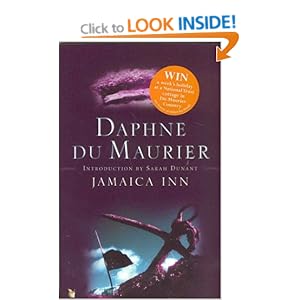
- Gerald (1934)Daphne du Maurier started writing her fourth novel, Jamaica Inn, in 1935. Since the publication of A Progress of Julius her father had died and she had written his biography entitled Gerald - A Portrait, which had been published by Victor Gollancz. She was married now and living the army life with her soldier husband Fredrick Browning, known as Boy or Tommy, and her first daughter Tessa. She went down to Fowey in Cornwall as much as possible but most of Jamaica Inn was written in Frimley where Tommy was based. Victor Gollancz who published all her future novels published Jamaica Inn in January 1936. The Inspiration for Jamaica Inn was two fold. As a young child Daphne had read avidly boys adventure stories such as Robert Louis Stevenson’s Treasure Island and she clearly wanted to write an adventure story in that style. The storyline itself was brewed from an outing that had taken place some years previously when Daphne and her friend Foy Quiller Couch (daughter of the famous writer and scholar Sir Arthur Quiller Couch) were staying at Jamaica Inn and went riding on Bodmin Moor. They were lost in bad weather conditions and apparently sheltered for some time in a derelict cottage on the moor but were eventually led back to Jamaica Inn by their horses. During that stay at Jamaica Inn Daphne also met and talked to the parson from the nearby church at Altarnun.
The central character of Jamaica Inn is Mary Yellen a young woman of twenty-three. She has lived all her life in the tranquil village of Helford, but when her mother dies she sets off to live with her mothers sister, Patience, a pretty, lively woman who Mary has not seen for many years. Aunt Patience lives with her landlord husband at Jamaica Inn on Bodmin Moor half way between Bodmin and Launceston.
Mary leaves Helford on a bleak November day and the coach takes her a far as Bodmin where everyone else gets off. Mary tells the coach driver that she wants to go on to Jamaica Inn and he is alarmed, he tells her that coaches no longer stop there and that decent folk don’t go to Jamaica Inn any more. They set off again and Mary’s apprehension grows as the coach races over the moor through the wind, rain and darkness. Eventually the coach stops and the driver hurriedly deposits Mary and her box of possessions on the roadside in front of Jamaica Inn, which is in total darkness.
Mary finds her way to the front door, which is answered by an enormous and powerful looking man carrying a lantern. This frightening figure is Joss Merlin, the landlord of Jamaica Inn. Joss drags Mary inside and then introduces her to her Aunt Patience, a poor tattered creature in a state of nervous anxiety almost unrecognisable from her former self. Mary goes to bed that night with a heavy heart, she does not want to be at Jamaica Inn, but she knows she must stay for her aunt’s sake.
Mary has a natural optimism and the next day she is ready to cope with her new life. Joss has left the house early and is away for nearly a week during which time Mary settles in, finds her way around the Inn and the surrounding moor-land and gets to know her Aunt Patience better. There is a locked and barred room at the Inn that puzzles Mary but Patience begs her not to ask questions.
On the day that Joss returns to Jamaica Inn he tells Mary that she will be required to serve behind the bar that evening. As darkness falls a strange assortment of men gather in the bar. Mary finds the men a most unpleasant crowd, particularly one man, a pedlar called Harry who makes fun of a poor idiot lad who is there. Eventually Mary asks her uncle if she can go to bed. Up in her room above the porch Mary tries to sleep, but before long she hears noises outside and peering out of the window she sees farm carts and covered wagons coming into the yard and many men including those that were in the bar earlier. The contents of the wagons are being unloaded with some of the packages being put into the carts and some being taken inside and put in the locked room. Mary realises that the contents of the packages must be the results of smuggling.
Once all the wagons have been unloaded everyone leaves except Joss, Harry and a stranger, who all return to the bar. Mary creeps downstairs and overhears an argument between the three men. It is obvious that the stranger is trying to break free from the smugglers gang. Afraid of being caught herself Mary hides in the parlour. She hears Joss send Harry home, then she realises that there is someone else there, another stranger who had been hiding upstairs all evening. Joss and this second stranger close the door to the bar and Mary can hear no more, but much later when she ventures out of the parlour she finds that the outer door is open and everyone has gone, but a rope handing over a beam in the bar suggests that Joss and the stranger from upstairs have killed the man who wanted to leave the smugglers gang.
One morning, about two weeks later, Mary finds a young man in the bar helping himself to a drink. Mary shouts at him, telling him that he will be sorry if her Uncle Joss finds him there. Joss then appears and Mary discovers that the interloper is in fact Joss’ younger brother, Jem Merlin, a horse thief who lives not far away across the moor.
That evening the wagons come again and take away the packages that had been hidden in the locked room. A few days later Aunt Patience becomes very panicky when Mr Bassat the local squire calls at Jamaica Inn with one of his men. He is a magistrate and he has a warrant to search the premises. The men even break into the locked room, but they find nothing. When Joss hears of Mr Bassat’s visit he is alarmed and goes straight out, heading across the moor on foot. Mary tries to follow Joss, but she gets lost on the moor. A man on horseback stops to help Mary, he is very strange looking with colourless skin, white hair and pale eyes. Mary realises that he is an albino and feels more comfortable when he introduces himself as Frances Davey, the vicar of Altarnun. The vicar takes Mary home to the vicarage for tea and she tells him the whole story of what has happened at Jamaica Inn since the day she arrived. Later he drives her home to the Inn.
When Mary gets home she finds Joss in a drunken stupor and he remains the same for five days. On the fifth day Mary goes out walking on the moor and accidentally stumbles upon Jem’s home. Jem hints that her uncle is involved in something worse than smuggling. Jem shows Mary a pony, formerly dapple-grey but now black, that he has stolen from Mr Bassat and intends to sell in Launceston on Christmas Eve. He invites Mary to go to Launceston with him and she agrees.
That evening Joss asks for more drink and starts to talk. He tells Mary that he is the leader of a band of wreckers who lure ships onto the rocks, then murder the people as they try to escape the sinking ships and how they rob the bodies of the people they have killed and steal the ships cargo. Over the next four days Mary stays in her room pondering over the shocking things that Joss has told her. Now she understands why her Aunt Patience is such a broken woman. Mary also thinks about Jem and wonders if he is involved in his brother’s wickedness.
On Christmas Eve Mary leaves her room and sets of to meet Jem who is going to take her to Launceston in his jingle. He immediately knows that something has changed in her because she has no colour in her face and the light has gone out of her eyes. She tells Jem that she knows about the wrecking. Jem sells the pony back to Mrs Bassat who does not recognise it as the one that was stolen. Mary and Jem enjoy the day, but when Jem kisses Mary she says she wants to go home and sends him to get the jingle. Jem doesn’t return and Mary sets of home by herself. The vicar of Altarnun passes her in his carriage and offers her a lift. Again she unburdens herself to him and tells him what Joss has told her about the wreckers, but he tells her not to worry as the government is planning to patrol the coast and soon wreckers will be a thing of the past.
Once home, Mary finds that Joss and his men are about to set off on a wrecking trip and they force her to go with them. Not only does Mary see for herself the horror of the ship being lured onto the rocks and the murder and robbery that goes on but she also has to fight off the advances of Harry the pedlar. She is brought back to Jamaica Inn physically and mentally broken. It is Christmas Day. Patience cares for Mary for two days and when she is well enough to come down stairs she finds that Joss has argued with Harry and locked him in the storeroom.
Jem comes to see Mary and she tells him what has happened, but she does not trust him enough to tell him what she plans to do. Joss is talking of running away so Mary grabs a chance to get to Altarnun and report what Joss and his men have done. She hurries to the vicarage but the vicar is away from home. Mary leaves him a note and goes on to Mr Bassat’s house. He is also away from home but she talks to Mrs Bassat who tells Mary that Mr Bassat now has proof of Joss’ guilt and that Mr Bassat and his men are going to Jamaica Inn that evening to arrest him.
Mrs Bassat sends Richards her groom back to Jamaica Inn with Mary but Mr Bassat and his men have not arrived there. Richards waits outside and Mary goes into the Inn where, to her horror, she finds Joss has been stabbed in the back. She runs back outside just as Mr Bassat and his men arrive. The men search the Inn and find that Patience has also been stabbed to death but Harry is unharmed as he was still locked in the store. Mary believes that Jem must be responsible for the murder of her aunt and uncle. Frances Davey arrives at the Inn having received Mary’s note. He offers her refuge and takes her home to the vicarage.
The next day Mary is alone in the vicarage and passes the time by looking through some of the vicar’s paintings and sketches. She is horrified to find a sketch of Frances Davey‘s congregation portrayed as sheep with him as a wolf. Mary wonders what sort of madman she has allowed to rescue her. When Frances Davey returns home he realises that Mary has seen the picture and that she is nervous of him.
Frances tells Mary that he has had lunch with the Squire and that Jem was there too and that it was Jem who had given Mr Bassat the proof of Joss’ guilt. The vicar then goes on to tell Mary that he, the vicar of Altarnun, was the leader of the wreckers and that Joss was answerable to him and that he had killed Joss and Patience. Frances knows that Jem and Mr Bassat will soon have worked this out so he must take Mary and flee immediately.
Mary and Frances set of across the moor in the direction of the coast, as Frances believes that if they can reach a ship he will be safe. However, the fog closes in and they have to seek shelter at Rough Tor, a place of high ground on the moor. Squire Bassat and his men along with Jem and the squire’s bloodhounds are pursuing Frances and Mary across the moor and as the fog clears they are visible not far behind. Frances tries to climb the Tor, but Jem shoots him and he falls to the ground dead.
Mary quickly recovers from the terrifying time she has had. The Bassat’s have taken her in and they offer her work, but she wants to return to Helford. One bright January morning she is walking on the moor when Jem comes along with all his possessions loaded into his cart. He stops to talk to Mary and tells her he is setting off for a new start. He kisses her and asks her to go with him and despite her plans she agrees.
- Daphne du Mauriers frank biography of her father had brought her writing to the fore but with Jamaica Inn she really became a novelist to be taken seriously. The characters are strong and capture your imagination; the book describes Cornwall so clearly that you feel as though you are there. Indeed, as a result of Daphne du Mauriers book, Jamaica Inn the place and the novel are so entwined in Cornish myth it is easy to forget that it is actually a story. In the first three months after Jamaica Inn was published it sold more copies that her first three books had sold altogether.
As well as drawing comparison with Robert Louis Stevenson’s Treasure Island, Jamaica Inn has also been described as a gothic tale comparable with Jane Eyre by Charlotte Bronte and Wuthering Heights by Emily Bronte. Certainly the characters of Joss and Jem could be compared with Rochester and Heathcliffe. The description of Bodmin Moor with its granite skies, howling winds and stark isolation are an appropriate background for a story that includes drunkenness, theft, smuggling, wrecking, murder and madness. But as well as the adventure and the gothic horror there is a third element that identifies this story with Daphne du Maurier. The men in her novels often exist to show the confines of the women and although Mary shows courage and resourcefulness with a desire for independence at the end of the story she opts to settle for a life with Jem, condemning herself to follow in her aunts footsteps.
- The du Mauriers (1937)
- The Young George du Maurier (1951)
- The Infernal World of Branwell Brontë (1960)
- Vanishing Cornwall (includes photographs by her son Christian)(1967)
- Golden Lads (1975)
- The Winding Stairs (1976)
- Growing Pains -— the Shaping of a Writer (1977) (a.k.a. Myself When Young -— the Shaping of a Writer)
- Enchanted Cornwall (1989)
When Daphne du Maurier was a child she went to stay at a house called Milton, near Peterborough. It was a huge house and very grand with a vast entrance hall, many rooms and a commanding housekeeper. This was a house with numerous staff, where even the children would be waited on at breakfast by the butler. Daphne liked the house, feeling at home there and held it in her memory.
As a young adult Daphne discovered Menabilly, the home of the Rashleigh family, situated just outside Fowey in Cornwall. It was a large house hidden away down a long driveway with vast grounds surrounded by woodland and a pathway leading down to a cottage nestled beside the sea with two beaches sheltered in a little cove. Daphne would visit the house often, trespassing in the grounds. The house was empty and neglected but she loved it. Much later Daphne was to live at Menabilly and do much of her writing there and her love for Menabilly was to last her a lifetime.
It was a combination of these two houses that became Manderley, the house at the centre of Daphne du Mauriers novel Rebecca, which opens with the famous lines:
“Last night I dreamt I went to Manderley again. It seemed to me I stood by the iron gate leading to the drive and for a while I could not enter, for the way was barred to me”.
Daphne started to write Rebecca in the late summer of 1937. Her husband, Tommy had been posted to Egypt as commanding officer of the 2nd battalion of the Grenadier Guards and she had left her two little girls Tessa and Flavia in England with their nanny while she accompanied him. This enforced separation from her beloved Cornwall must have caused Daphne to turn her thoughts to writing a novel set in that area and although she could not know it at the time, she was writing the book that was to become her most famous work. The book was completed when Tommy was posted back to Aldershot and the family were reunited in a house called Greyfriars near Fleet in Hampshire. Victor Gollancz published Rebecca in April 1938.
The central character of Rebecca is the second wife of Maxim de Winter. The novel begins with her reflecting on a dream she has had about Manderley and as she remembers her dream the story unfolds. The character is never named but she tells the story in the first person and is traditionally referred to as the narrator.
The story begins in Monte Carlo where a rich American woman called Mrs Van Hopper is staying with her paid companion, the young and inexperienced narrator. Mrs Van Hopper discovers that Maxim de Winter is staying at the same hotel and is eager to meet him, as an air of mystery and sadness is said to surround him since the recent death of his wife Rebecca. To Mrs Van Hopper’s delight she gets the opportunity to invite Maxim to join her and chatters away in her crass manner while he remains icily polite and the narrator remains quietly in the background.
Mrs Van Hopper becomes indisposed and while she is confined to her room Maxim and the narrator get to know one another. The narrator thinks Maxim is wonderful but his is twice her age and much more experienced in life than her and despite the fact that they go out together every day and spend a lot of time together she thinks Maxim is just being kind to her. When Mrs Van Hopper suddenly decides to leave Monte Carlo the narrator is distraught at the thought of never seeing Maxim again, but Maxim asks the narrator to marry him and she accepts. Mrs Van Hopper is very disparaging of their relationship and tells the narrator that Maxim is only marrying her because he is lonely and that he has not got over the death of Rebecca.
Once married Maxim takes the narrator home to Manderley his country estate in Cornwall. As they motor down the long drive towards the house the narrator feels anxious at the prospect of what the future holds. Maxim and the narrators arrival is greeted by the entire staff of the house and estate and the narrator feels nervous as she is introduced to Mrs Danvers, the housekeeper. Mrs Danvers is a frightening looking woman with hollow eyes.
On the first day at Manderley Maxims sister Beatrice, her husband Giles along with Maxims estate manager Frank Crawley come to lunch so that they can be introduced to Maxims new wife. Beatrice is a very blunt and plain speaking woman and after lunch she tells the narrator that Mrs Danvers worshiped Rebecca. That afternoon, when the visitors have gone, Maxim takes the narrator and his dog Jasper for a walk through the grounds and down to the bay where there are two beaches. On the further beach is an old boathouse and Jasper runs to it with the narrator following but Maxim gets angry and calls them away, marring what had started as a happy afternoon.
Once Maxim has calmed down he explains briefly that if the narrator had his memories of the boathouse and the beach and the bay she would not want to go there either. The narrator knows that Rebecca was drowned in a boating accident in the bay, and Maxim tells her that he identified her body when it was found about two months later, forty miles up the coast but Maxim is very upset and does not want to talk about it any more. A few days later the narrator approaches the subject of Rebecca with Frank Crawley who tells her that Rebecca was the most beautiful creature he had ever seen.
Living at Manderley proves to be difficult for the narrator partly because there are reminders of Rebecca everywhere but also because she is unfamiliar with such grandeur. She is unable to give instructions to the staff effectively and she finds Maxim distant once he is back at work running the estate with Frank. Mrs Danvers runs the household as she did when Rebecca was mistress and although faultless as a housekeeper she makes her contempt for the narrator obvious at every opportunity. It is clear that Rebecca loved the lifestyle that the narrator is struggling with.
A few days later Maxim goes to London on business leaving the narrator at Manderley. While he is away a man called Jack Favell visits Mrs Danvers. He is introduced to the narrator as Rebecca’s cousin. Jack chats to the narrator in a rather over familiar manner but when he leaves he asks her not to mention the visit to Maxim.
Maxim and the narrator have a suite of rooms in the East Wing of the house overlooking the rose garden but Rebecca and Maxim’s rooms were in the West Wing overlooking the sea. When Jack has gone the narrator ventures into the West Wing of the house to see what it is like. Mrs Danvers suddenly appears and offers to show the narrator Rebecca’s room. The room is just as it would have been when Rebecca was alive. All her clothes are in the wardrobe, her hairbrushes are on the dressing table, even her nightdress is on the bed and everything is exquisitely beautiful. Mrs Danvers talks about Rebecca with loving devotion and describes the night that Rebecca went out sailing and never returned leaving Maxim distraught.
The narrator is distressed by how powerfully Rebecca’s presence is felt in and around Manderley even though she has been dead for over a year. And how everyone seems to want to tell her how wonderful Rebecca was except Maxim who can hardly bear to mention Rebecca’s name.
Traditionally a fancy dress ball is held at Manderley every year and it is agreed that the tradition should continue so that Maxim can show off his bride to the county. The narrator cannot make up her mind what to wear. Surprisingly Mrs Danvers steps in to help and suggests that she copies the costume from a painting of Caroline de Winter, one of Maxim’s ancestors. The narrator keeps her costume a secret and despite much teasing from Maxim, who suggests that she should dress as Alice in Wonderland, she will not be drawn into telling anyone except her maid.
On the evening of the ball the narrator’s maid helps her to dress and transformed into Caroline de Winter she looks absolutely beautiful as she steps out of her bedroom and down the stairs to where Maxim, Beatrice, Giles and Frank are waiting. But as she steps forward a look of horror crosses all their faces and Maxim starts shouting at her. The narrator tries to explain that she has copied the painting, but by now Maxim is shaking with rage and tells her to go and get changed. The narrator turns and runs back to her room, tears filling her eyes and as she runs she sees Mrs Danvers standing in the shadows with a look of triumph on her evil face.
Soon afterwards Beatrice comes to the narrators room. She explains that Maxim thought that the narrator had chosen the costume deliberately because it is identical to the costume Rebecca wore to her last ball. Later, when she has calmed down a little, the narrator changes into an ordinary evening gown and takes her place at Maxim’s side for the rest of the evening, but there is a tension between them and the narrator fears that she has lost Maxim completely.
The next morning all thoughts of the ball have to be put to one side when a ship hits the rocks in the bay. Maxim and Frank go to help and all the crew from the ship are rescued, but a diver is sent down to check the damage to the ships hull and while he is under water he discovers a little sailing boat on the seabed. Plans swing into place to raise the sailing boat and when it surfaces a body is discovered on the floor of the cabin that is later identified as Rebecca.
The narrator has believed for a long time that Maxim’s love for Rebecca is what is causing him to be so distant with her and she is desperately worried at how Maxim will react to the discovery of Rebecca’s body. However she is not prepared for what he is about to tell her. Instead of being saddened by the sharp reminder of Rebecca’s death he is angry that her body has been found and finally he is ready to really talk to his young wife.
He tells the narrator that he had never loved Rebecca and that they had lived a lie from the first, with her playing the part of the mistress of Manderley while she carried on numerous liaisons with other men, both at her flat in London and at Manderley. She had tried to involve Giles and Frank but much of her time had been spent with Jack Favell, who she met at night in the boathouse. Maxim explained that he had gone along with her to maintain the pretence of a successful marriage to preserve the good name of Manderley, the home he loved, but eventually the situation had become unbearable and one night when Rebecca had returned from London and gone straight down to the boathouse, Maxim had taken his gun and followed her expecting to catch her with Jack Favell. Maxim had been surprised to find Rebecca alone, but she had taunted him saying that if she were pregnant he would not be sure who the father of her child was. This was too much for Maxim and he shot Rebecca, then carried her body out to her boat, which he took out to sea and sank by driving three holes into the bottom of the boat. No one had suspected anything and later Maxim had identified the body of a woman, though he knew it could not be Rebecca and his guilt at what he had done had been interpreted as grief by everyone.
Although the situation is grave the narrator feels that she and Maxim can cope with anything now that she knows that Maxim did not love Rebecca. An inquest takes place attended by Colonel Julyan, the local Justice of the Peace. Problems arise when William Tabb, the boat builder, says that Rebecca was an excellent sailor and that the boat would not have sunk but for the holes that had been deliberately driven through the bottom of it. However, there seems to be no motive for foul play and eventually a verdict of suicide is given.
Later that evening Maxim and Frank bury Rebecca at a private funeral in the chapel on the Manderley estate. While they are out Jack Favell arrives a little worse for drink and demands to see Maxim. The narrator feels it is best to invite him in and they wait together for Maxim. When Maxim and Frank return Jack Favell says he has a letter that Rebecca wrote to him on the day she died, asking him to meet her at the boathouse that night. He claims that she could not have intended to commit suicide and says that if he makes it known that he has such a letter, it could make things difficult for Maxim. Jack Favell is not a rich man and this is clearly developing into an attempt at blackmail. Maxim will have none of it and calls Jack’s bluff by telephoning Colonel Julyan and asking him to come over.
When Colonel Julyan arrives Jack shows him the letter and the discussion rapidly develops into a heated argument during which Jack says that Rebecca was his lover and that they were going to be married. He then goes a step further and actually accuses Maxim of murdering Rebecca. Colonel Julyan tries to calm the situation down and points out that there is no real proof that Jack and Rebecca were involved with one another. Jack insists that Mrs Danvers be summoned, but instead of supporting Jacks story she says that Rebecca did not love Maxim or Jack and just played with their affections to amuse herself.
Colonel Julyan asks Mrs Danvers if she can think of a reason why Rebecca would have killed herself, but Mrs Danvers is emphatic that Rebecca would never have done such a thing. He then asks what Rebecca had been doing in London on the day she died. With the help of Rebecca’s appointments diary the group discover that Rebecca had made an appointment with a man called Baker. This person is unknown to everyone, but there is a telephone number in the diary and Colonel Julyan rings the number and finds out that the number relates to a Dr Bakers consulting rooms. It is agreed that Maxim, the narrator, Colonel Julyan and Jack Favell will travel to London the next day and try to speak to Dr Baker in the hope that he can throw some light on what happened that day.
Dr Baker certainly does have some answers for the group when they gather in his home the following day. He tells them that Rebecca had seen him on a previous occasion and he had taken X-rays and that she had returned on the day in question for the results. It was bad news and he had told her that she had an inoperable growth and that there was nothing he could do for her other than offer her painkillers. Maxim thanks Dr Baker and they all leave. Jack Favell looks grey and shaken, he had no idea about Rebecca and now there is a suicide motive he has lost his hold over Maxim.
The small group part company and Maxim and the narrator go for a meal. They are free of Rebecca and can begin their life together at last. Later they set off on the long journey home to Cornwall. They drive through the night and it is about two thirty in the morning as they approach Manderley and see the sky lighting up like the first red streaks of sunrise, little by little spreading across the sky. But this is not the sunrise it is flames and Manderley is burning.
In the Christian Science Monitor, September 14th 1938 page 12, V S Pritchett reviewed Rebecca for the American public. He said that it had received fabulous reviews in England, reading almost like advertising copy. He then went on to say that it would be absurd to make a fuss about Rebecca, which would be here today and gone tomorrow like the rest of publicity’s masterpieces. How wrong he was, Rebecca became the most famous of all Daphne du Maurier’s novels and is still the one that she is best remembered for. Daphne could never understand its popularity saying that it was simply a study in jealousy.
Rebecca has been variously described, firstly as an example of the Cinderella story but with the central character being helped from rags to riches by the older man who marries her rather than the more traditional help of a fairy godmother. Rebecca has also been described as the first major gothic romance in the 20th century. It certainly contains all the elements of the great gothic novel and had often been compared to Jane Eyre by Charlotte Bronte, with the house so strongly influenced by the previous occupant, the brooding hero in the shape of Maxim, the mad woman in the shape of Mrs Danvers, the growing tension, and finally the house destroyed by fire.
There is another school of thought that believes the Rebecca, Maxim, narrator triangle is a reproduction of the relationship between Daphne du Maurier and her father and mother or perhaps Daphne, her husband Tommy and his previous fiancée. The love that Daphne and her father Gerald had for one another is well documented, as is the less comfortable relationship that Daphne had with her mother. It has been suggested that the younger woman’s struggle to feel secure in the older mans love because of the influence of the more sophisticated and successful Rebecca comes from the relationship Daphne had with her parents. Another similar suggestion comes from the fact that Tommy had been engaged to a very beautiful and self-assured woman before he knew Daphne and although this relationship was called off, Daphne was consumed with jealousy and doubted that Tommy could love her as much as he had loved the other woman. It seems likely that this woman may well have been developed to create the character of Rebecca. Either way there can be little doubt that the nameless second Mrs de Winter is none other than Daphne du Maurier herself.
Over the years many people have asked why the second Mrs de Winter does not have a name. Daphne du Maurier’s reply to this was that she could not think of one and it became a challenge in technique to write the whole story without naming her. It proved to be a very effective way of making the character appear to be a lesser person than Rebecca, so that she is less confidant, less capable, less attractive to Maxim, not even a significant enough person to be named.
In 1939 Daphne du Maurier adapted Rebecca for the stage and the play, like the novel, has retained its popularity ever since. The story does leave one with lots of unanswered questions and there have been a number of attempts to write sequels to Rebecca. In 1993 Susan Hill wrote Mrs de Winter, which continues the story to quite a successful conclusion and in 2001 Sally Beauman wrote Rebecca’s Tale, which moves the story on twenty years and then looks back at what happened with interesting results and without spoiling any of the tension of the original novel. Undoubtedly the interest in Rebecca will continue for a long time to come.


