
CHAPTER 1
September 1986: Roland Michell (Roland) is a 29 y/o literary researcher, a Ph.D. in literature from Prince Albert College in 1978.  He is researching Randolph Henry Ash (RHA), a noteworthy though fictitious Victorian poet, at the London Library.
  Ash was the subject of his dissertation. He works part-time for the noted Ash scholar James Blackadder (JB) in JB's "Ash Factory" at the British Museum.
 JB, who is a Scot, has been editing the poet's Complete Works since 1951. Roland is looking for sources to Ash's poem Garden of Prosperpina [Persephone].
The Garden of Prosperine
by Algernon Charles Swinburne Here, where the world is quiet,
Here, where all trouble seems
Dead winds' and spent waves' riot
In doubtful dreams of dreams;
I watch the green field growing
For reaping folk and sowing,
For harvest-time and mowing,
A sleepy world of streams.
I am tired of tears and laughter,
And men that laugh and weep;
Of what may come hereafter
For men that sow to reap:
I am weary of days and hours,
Blown buds of barren flowers,
Desires and dreams and powers
And everything but sleep.
Here life has death for neighbour,
And far from eye or ear
Wan waves and wet winds labour,
Weak ships and spirits steer;
They drive adrift, and whither
They wot not who make thither;
But no such winds blow hither,
And no such things grow here.
No growth of moor or coppice,
No heather-flower or vine,
But bloomless buds of poppies,
Green grapes of Proserpine,
Pale beds of blowing rushes,
Where no leaf blooms or blushes
Save this whereout she crushes
For dead men deadly wine.
Pale, without name or number,
In fruitless fields of corn,
They bow themselves and slumber
All night till light is born;
And like a soul belated,
In hell and heaven unmated,
By cloud and mist abated
Comes out of darkness morn.
Though one were strong as seven,
He too with death shall dwell,
Nor wake with wings in heaven,
Nor weep for pains in hell;
Though one were fair as roses,
His beauty clouds and closes;
And well though love reposes,
In the end it is not well.
Pale, beyond porch and portal,
Crowned with calm leaves, she stands
Who gathers all things mortal
With cold immortal hands;
Her languid lips are sweeter
Than love's who fears to greet her
To men that mix and meet her
From many times and lands.
She waits for each and other,
She waits for all men born;
Forgets the earth her mother,
The life of fruits and corn;
And spring and seed and swallow
Take wing for her and follow
Where summer song rings hollow
And flowers are put to scorn.
There go the loves that wither,
The old loves with wearier wings;
And all dead years draw thither,
And all disastrous things;
Dead dreams of days forsaken,
Blind buds that snows have shaken,
Wild leaves that winds have taken,
Red strays of ruined springs.
We are not sure of sorrow,
And joy was never sure;
Today will die tomorrow;
Time stoops to no man's lure;
And love, grown faint and fretful,
With lips but half regretful
Sighs, and with eyes forgetful
Weeps that no loves endure.
From too much love of living,
From hope and fear set free,
We thank with brief thanksgiving
Whatever gods may be
That no life lives for ever;
That dead men rise up never;
That even the weariest river
Winds somewhere safe to sea.
Then star nor sun shall waken,
Nor any change of light:
Nor sound of waters shaken,
Nor any sound or sight:
Nor wintry leaves nor vernal,
Nor days nor things diurnal;
Only the sleep eternal
In an eternal night.
He is researching Randolph Henry Ash (RHA), a noteworthy though fictitious Victorian poet, at the London Library. Ash was the subject of his dissertation. He works part-time for the noted Ash scholar James Blackadder (JB) in JB's "Ash Factory" at the British Museum. JB, who is a Scot, has been editing the poet's Complete Works since 1951. Roland is looking for sources to Ash's poem Garden of Prosperpina [Persephone].by Algernon Charles Swinburne Here, where the world is quiet,
Here, where all trouble seems
Dead winds' and spent waves' riot
In doubtful dreams of dreams;
I watch the green field growing
For reaping folk and sowing,
For harvest-time and mowing,
A sleepy world of streams.
I am tired of tears and laughter,
And men that laugh and weep;
Of what may come hereafter
For men that sow to reap:
I am weary of days and hours,
Blown buds of barren flowers,
Desires and dreams and powers
And everything but sleep.
Here life has death for neighbour,
And far from eye or ear
Wan waves and wet winds labour,
Weak ships and spirits steer;
They drive adrift, and whither
They wot not who make thither;
But no such winds blow hither,
And no such things grow here.
No growth of moor or coppice,
No heather-flower or vine,
But bloomless buds of poppies,
Green grapes of Proserpine,
Pale beds of blowing rushes,
Where no leaf blooms or blushes
Save this whereout she crushes
For dead men deadly wine.
Pale, without name or number,
In fruitless fields of corn,
They bow themselves and slumber
All night till light is born;
And like a soul belated,
In hell and heaven unmated,
By cloud and mist abated
Comes out of darkness morn.
Though one were strong as seven,
He too with death shall dwell,
Nor wake with wings in heaven,
Nor weep for pains in hell;
Though one were fair as roses,
His beauty clouds and closes;
And well though love reposes,
In the end it is not well.
Pale, beyond porch and portal,
Crowned with calm leaves, she stands
Who gathers all things mortal
With cold immortal hands;
Her languid lips are sweeter
Than love's who fears to greet her
To men that mix and meet her
From many times and lands.
She waits for each and other,
She waits for all men born;
Forgets the earth her mother,
The life of fruits and corn;
And spring and seed and swallow
Take wing for her and follow
Where summer song rings hollow
And flowers are put to scorn.
There go the loves that wither,
The old loves with wearier wings;
And all dead years draw thither,
And all disastrous things;
Dead dreams of days forsaken,
Blind buds that snows have shaken,
Wild leaves that winds have taken,
Red strays of ruined springs.
We are not sure of sorrow,
And joy was never sure;
Today will die tomorrow;
Time stoops to no man's lure;
And love, grown faint and fretful,
With lips but half regretful
Sighs, and with eyes forgetful
Weeps that no loves endure.
From too much love of living,
From hope and fear set free,
We thank with brief thanksgiving
Whatever gods may be
That no life lives for ever;
That dead men rise up never;
That even the weariest river
Winds somewhere safe to sea.
Then star nor sun shall waken,
Nor any change of light:
Nor sound of waters shaken,
Nor any sound or sight:
Nor wintry leaves nor vernal,
Nor days nor things diurnal;
Only the sleep eternal
In an eternal night.
Reading RHA's copy of Giambattista Vico's Principj di Scienza Nuova ["New Science", author lived 1668-1744], he comes across drafts of two previously unknown letters in RHA's handwriting addressed to an unnamed woman. RHA refers to how she impressed him at the breakfast held at Crabb Robinson's [1777-1867], and how they seemed to understand each other and various current literary topics such as Hugo's play Iñez de Castro and the essayist Richard Steele's tale of the Robinson Crusoe-like figure, Alexander Selkirk.
 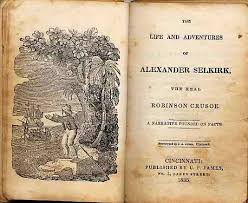 Roland infers the letters date after 1856, when RHA published Gods, Men and Heroes. He decides to steal the letters and not mention them to JB for the time being.
and the essayist Richard Steele's tale of the Robinson Crusoe-like figure, Alexander Selkirk. Chapter 2
Chapter 2
Opens with a quotation from RHA's 1840 Icelandic-Nordic epic poem, Ragnarök. In Norse mythology, Ragnarök (Old Norse "final destiny of the gods") is a series of future events, including a great battle foretold to ultimately result in the death of a number of major figures (including the gods Odin, Thor, Týr, Freyr, Heimdall, and Loki), the occurrence of various natural disasters, and the subsequent submersion of the world in water. Afterward, the world will resurface anew and fertile, the surviving and reborn gods will meet, and the world will be repopulated by two human survivors. Ragnarök is an important event in the Norse canon, and has been the subject of scholarly discourse and theory
Mortimer P. Cropper (MPC) is Trustee of the Stant Collection at Robert Dale Owen University in Harmony City, New Mexico, the curator of a large collection of RHA correspondence and memorabilia. He is trying to possess all of RHA that he can.
Roland ponders the disappointments he has met in life, his meager existence and sense of failure. He lives with Val, who calls him Mole. They live frugally in a dumpy basement room, decorated with photos of paintings of RHA and reeking of cat urine from the landlady Mrs. Irving's flat above. Val once wrote an essay on RHA, which led to an unjust charge that Roland had helped her. Val earns most of the income and Roland is essentially living off her. Val and Roland have a rather unhappy relationship--she is bitter about the menial work she performs. He thinks of his more successful departmental rival, Fergus Wolff, and wonders who RHA was writing to.
Chapter 3
Roland goes to Bloomsbury, photocopies the letters. He consults Crabb Robinson's diary--Crabb was a man who had known all the major literary figures of the day--at Dr. William's library. He learns that in June 1858, RHA had met "Miss LaMotte" and "Miss Glover" for the first time at his breakfast party. Miss LaMotte is the daughter of the writer of Mythologies, Isidore LaMotte. Back at the British Museum, JB, 54 y/o, works with his assistant Paola. JB was asked to edit the Complete Poems and Plays of RHA in c. 1959, with support from Lord Ash, RHA's heir. Roland tells him about the Vico, though not specifically about the letters he has stolen. JB tells him about Isidore LaMotte, the author of Mythologies, an 1832 book about the legends of Bretagne (French, in English=Brittainy). Miss LaMotte was the author of Last Things, various children's stories, and Tales Told in November. He mentions Ellen Best Ash (EBA or Ellen), RHA's wife, who wrote a personal journal, and a single book called Helpmeets (about wives of great men such as Tennyson).
He encounters Fergus, who when asked tells him Isidore's daughter was named Christabel [Madeleine] LaMotte (CLM). She also wrote the strange epic poem The Fairy Melusina in the 1860's, published it in the 1870's. He describes its plot (p. 40), an old and oft-told tale about a woman who is half-human and half-snake. Melusina married Raimondin, bears his children, but despite her warning he spies on her one day in her bath and discovers that she has the form of a serpent below the waist.. Fergus mentions that Dr. Maud Bailey, with whom he has had an affair, is an expert on CLM. She runs a Women's Resource Centre in Lincoln [Lincolnshire is on the west coast, north of London]. The other expert is Prof. Leonora Stern from Tallahassee.
CHAPTER 4
Opens with a quote from The Fairy Melusina.
Roland has already read some books about CLM. CLM's grandparents Jean-Baptiste and Emilie LaMotte had fled the Terror of 1793 in France and escaped to England. Emilie's brother Raoul de Kercoz stayed behind to maintain the family manor Kernemet, in Brittainy, France. Isidore was born in 1801, married Arabel Gumpert 1823. Their daughters were Sophie (born 1830, married Sir George Bailey of Seal Close in Lincolnshire) and Christabel (CLM, born 1825). CLM had a small inheritance and lived with Blanche Glover (BG), who was also artistically inclined and who committed suicide by drowning in 1861. After BG died, CLM went to live with her sister Sophie and wrote no more poetry, dying in 1890 at the age of 65.
[There is much discussion throughout the novel exploring attitudes of feminists to the various women depicted including CLM and Ellen. Blanche and CLM were assumed to be lesbians.]
Roland goes to visit Maud Bailey in Lincoln, at Lincoln University. She is tall, cold, at times seeming hostile. CLM had bequeathed her papers to her niece May Bailey (Maia Thomasine Bailey). May married her first cousin and was Maud's GG GM, thus Maud is CLM's GGG niece (but see Chap 28). She knows of no journal of CLM and of only a few letters, kept by Sir George Bailey at Seal Court, but he is hostile to literary research.
Roland mentions the letters he has stolen to Maud. She has found only one reference to RHA in CLM's letters, an 1869 note to William Rossetti referring somewhat hostilely to RHA's poem The Incarcerated Sorceress [is she CLM?]. They visit the Resource Centre.
Roland reads from BG's journal about her homelife with CLM ("The Princess") starting in 1858, the breakfast at Crabb Robinson's with RHA, etc. BG painted "Christabel before Sir Leoline", a title referring to the Samuel Taylor Coleridge poem Christabel, after which CLM is presumably named. CLM had become exercised over a letter she received from RHA (one of those for which Roland has the draft). CLM is finishing the poem The Glass Coffin (a fairy tale also told by the Grimm brothers). BG describes a prowler (RHA?), and later CLM seems to be hiding something from her.
Roland shows Maud the 2 stolen letters, and she is intrigued to learn the possible connection with RHA--it would change Ash scholarship. She puts up Roland for the night, gives him Tales for Innocents to read. He reads tales about a Queen, and a shoemaker, and notes illustrations by BG. The tales are derived from the Grimm brothers and from Ludwig Tieck. A woman gives birth to a boy who is half-hedgehog. Maud feels CLM dislikes children.
Maud is a Norfolk Bailey, whereas Sophie LaMotte had married a Lincolnshire Bailey, two family groups which do not get along. Maud recalls a poem she knew by CLM about the Cumaean Sibyl. Maud had written a paper on "Marginal Beings and Liminal Poetry" [Liminal means at the limits of perception], and Roland notes a connection between RHA's incarcerated sorceress and CLM's In-Pace. They discuss how they came to their current literary interests, their educations. Maud offers to take him to the environs of Seal Court, where CLM lived out her last years.
Maud muses about her affair with Fergus. Only in the privacy of the bathroom does she unwrap and let fall her lovely yellow hair--Fergus had challenged her to let it be seen uncovered.
Roland reads The Glass Coffin from Tales for Innocents. A tailor rescues a girl with long golden hair, trapped in a glass coffin...
Chapter 5
Maud and Roland visit the wolds (upland open country) of Lincolnshire. They see Seal Court in the distance, the village Croysant le Wold, and the St . Etheldreda's church in whose yard CLM is buried. He reads the tombstone for CLM, born 1825, died 1890. The neglected gravesite was tended by Leonora the previous summer.
Walking up the hill, Roland rescues an elderly lady, Joan Bailey, whose wheelchair has become stuck in the mud. She is wife of Sir George Bailey, who arrives soon after. He is gruff and inhospitable, but Joan invites Maud and Roland into Seal Court and George acquiesces. It is a decaying manor house, much of which is closed off, poorly heated and in poor repair, no longer provided with servants to help the elderly couple. He is interested in horses and mentions Tommy Bailey, Maud's great-uncle, who rode the horse Copenhagen. George's GG GF (also Sir George) planted the woodlands. They try to make conversation, and Maud and Roland mention their interest in CLM. Sir George disparages her and praises RHA. Maud mentions CLM's description of the Seal Court winter garden. George also disparages Leonora, who he ran off at gunpoint. Joan offers to show the two CLM's former room.
In CLM's room, Maud notices the dolls and recalls a CLM poem about "Dolly keeps a secret". She deduces this may have been a clue and finds in dolly's cot packets of letters from RHA and CLM. George takes the letters, and they return downstairs. The foursome debates what to do next. George wants to let dead bones lie still. Joan reads the first letter, the final version of RHA's 1858 first introductory letter to CLM. In addition to his letter to her, there is a packet of her responses to his letters. CLM is not inclined to receive his visit... They read the final letters. CLM asks for her letters back, which RHA agrees to, though asking her not to destroy them. George fears a scandal. Maud and Roland work to convince George to let the letters be studied, but he is reluctant and wants advice.
Later, Maud and Roland worry that MPC will try to acquire these letters. They agree to keep their existence secret for now.
Chapter 6
Humorous description of MPC's visit to an elderly lady, Mrs. Daisy Wapshott, who has a letter. It is from RHA to Daisy's husband Rodney's mother Sophia, a "godchild" to RHA [apparently not CLM's sister], and it mentions ducks and drakes. MPC surreptitiously photographs it. This is one of the few instances when RHA displayed any patience toward a child. MPC offers to buy the letter for a handsome price. He is flamboyant and drives a large black Mercedes.
MPC contemplates the autobiography he may write. His G GM Priscilla Penn Cropper received a rebuffing letter from RHA regarding her interest in the occult and spirit communications, etc. He muses on the writings of RHA, including Ragnarök and the love poem sequence Ask to Embla. MPC has written The Great Ventriloquist, RHA's biography. He recalls RHA's visit to France with his new bride Ellen in 1848, to the Fontaine de Vaucluse and the source of the Sorgue (a site Petrarch is said to have lived at after the death of Laura [de Sade, in 1348], the lovely married woman with golden hair described in his sonnets).
Like Petrarch's Laura and Dante's Beatrice, MPC believes Embla represents a real woman in RHA's life. He ponders Ellen's reluctance to marry RHA and her father's doubts about him--she was 36 when she married him. He recalls how Victorian men turned to the underworld of prostitutes to satisfy their urges--did the prim Ellen satisfy the sensual RHA reflected in this poem, or did she hide a more passionate nature, or did RHA simply sublimate his desires?
MPC calls to set up a meeting with Miss Beatrice Nest Ph.D.
Chapter 7
Miss Beatrice Nest is like a large-breasted Fafnir, guarding her hoard of Ellen Best Ash's papers, which she has been charged with editing on the advice of her mentor, Professor Bengtsson. Ellen wrote a journal, and Roland arrives ahead of MPC to view it. Beatrice reluctantly allows him to. Ellen had read The Fairy Melusina in 1872 and made an entry to this effect. Beatrice mentions to MPC what Roland is researching, and MPC recalls a pale photo of CLM in the Stant collection.
Roland reads on, finds Ellen admiringly describing The Fairy Melusina as truly original, etc., an unexpected attitude regarding a woman who may have been RHA's mistress. Ellen believes she has at least not prevented her husband's genius, even if she has not facilitated it.
Back home, Roland finds a letter from Joan Bailey permitting Maud and him to review the letters they hold. Val arrives in a Porsche driven by Euan MacIntyre, a solicitor who has provided her work and is taking a fancy to her.
Chapter 8
Roland and Maud go over the letters in Sir George Bailey's cold library. He is annoyed at Maud's terms--she will read CLM's letters and he will read RHA's. RHA seems to have read Christabel's insect poems. He seems to have been under stress.
The individual letters are quoted. CLM is concerned about their letters being seen by others. RHA speaks of her intelligence, the nature of poetry versus novels, her work The Drowned City (on the drowned City of Is/Ys, which Queen Dahud, the sorceress, ruled). Maud explains this was a Breton legend like The Standing Stones.
Back at her flat, Maud learns by letter that Leonora Stern is coming. CLM's riddle about an Egg and her need for solitude is quoted. Fergus has also written Maud, saying Roland is not in her class, wants to consult her archives about a "siege-paper" he wishes to write, asks if she has read Lacan [Jacques Lacan, a French Freudian psychoanalyst 1901-1981]. Leonora's letter refers to her interest in female imagery and CLM's lesbian sexuality in Melusina and Drowned City, of water, milk and amniotic fluid, etc. She wants Maud to present a paper to the Sapphic society.
Next day at Seal Court, she visits the winter garden which CLM had loved, sees no fish in the pond described by CLM. It is snowing. Maud and Roland are unable to return to town, and are invited to stay the night. Joan speaks of Maud's beauty, but Roland mentions Val as his girlfriend. They go upstairs, Maud is wary of Roland, undresses in the bathroom, he tries to look through the keyhole to see if it is occupied, she is startled by him--she has let down her hair (thus now undisguised, as in Melusina).
Chapter 9
CLM's story The Threshold is quoted. The Childe [youth of gentle birth] encounters three bonecracking whiteladies. He chooses the 3rd, who has only a lead casket, and he will go with her. The standing stones in the moor lead to a descending track...
Chapter 10
More of the letters between RHA and CLM are read by Roland and Maud.
RHA sends her a poem. Comments about her metaphor of entrapment. He wants to write a poem on insect life and the life of Jan Swammerdam [1637-1680, Dutch naturalist and microscopist, author of Historia Generalis Insectorum on the natural history and metamorphosis of insects, said in this novel to be the inventor of the microscope]. He speaks of her Fairy project.
CLM demurs, says she lives quietly, neither calls nor receives calls, has read all his poems. His poem Ragnarök was the cause of a crisis in her simple religious faith, in making Holy Scripture like any other Wonder Tale. She wants to write an epic poem. She encloses 2 poems, "Metamorphosis" (about a butterfly) and "Psyche" (ants).
RHA speaks of his religious views as reflected in Ragnarök, of Odin as the Wanderer, etc. He is not an atheist. He encourages her to write her epic.
CLM is full of doubt, again asks him about Christianity, cites his Lazarus poem Déjà-vu or the Second Sight, speaks of séances at Mrs. Lees, ...
RHA is only sure of the life of the Imagination (like Keats).
CLM speaks again of Jesus, the poetry of the King James Bible, a lecture she attended on Spiritual Manifestations... She wants him to leave her alone with her simple faith, or she will be a Lost Soul, her autonomy is threatened. She ponders whether to ask him not to write again.
RHA is relieved she has not actually asked him not to write. He asks about her Melusine epic.
CLM says she has been sick, as has Blanche, mentions her Dog Tray... She tells how the Melusina project began, how her father told her the tale of Mélusine. He had hoped to be a French Grimm. The Druids, Menhirs, Dolmens, Dames Blanches (whiteladies). Sophie had no interest in these things. CLM had learned French, Latin, Greek, Breton, and German. The nature of the fairy Melusine, her progeny...
RHA has nearly finished Swammerdam. He wants to know why her father named her Christabel, was it after Coleridge's unfinished poem Christabel? He wanted to hear from Coleridge how it ended (though he is now dead). He praises her Melusina concept.
CLM met Coleridge only as an infant. Coleridge had said her name was beautiful, rested his hand on her golden curls, hoped her name would not be an ill omen, implying the heroine was destined for tribulation. More about Melusina and Tales Told in November...
RHA has been to Richmond Park and imagines CLM's home and hopes to see it...
CLM is worried about what the world and his wife will say and wants to end their conversation.
RHA argues they can correspond as poets rather than as man and woman.
CLM wants her freedom even from him. Bethany is her cottage. She and her companion BG have a pact to live the life of the Mind, renounce the outside world. He is a threat to her quiet world.
RHA is distressed that he has not heard from her, though he sent Swammerdam to her.
CLM says his letter and poem did not reach her, it was taken by Blanche. She wants to walk with him in Richmond Park to make it up to him.
RHA recalls meeting her in the park. They are now corresponding via an alternate address, a type of subterfuge.
CLM again speaks about Mrs. Lees' séances.
RHA describes to her how magnets are naturally attracted. He professes his love for her.
CLM cannot let him burn her up. She wants her solitude, not a limited combustion with him.
RHA follows up on the metaphor of combustion.
CLM has met with him again, will meet with him, is in love.
RHA has been to her house, loves his wife and also her, recognizes he is betraying his wife.
... [More professions of love by both.]
RHA speaks of a journey originally planned with his naturalist friend Francis Tugwell, but Tugwell has backed out and now RHA invites her to come.
CLM has decided to join him.


